Executive Summary & Legal Position
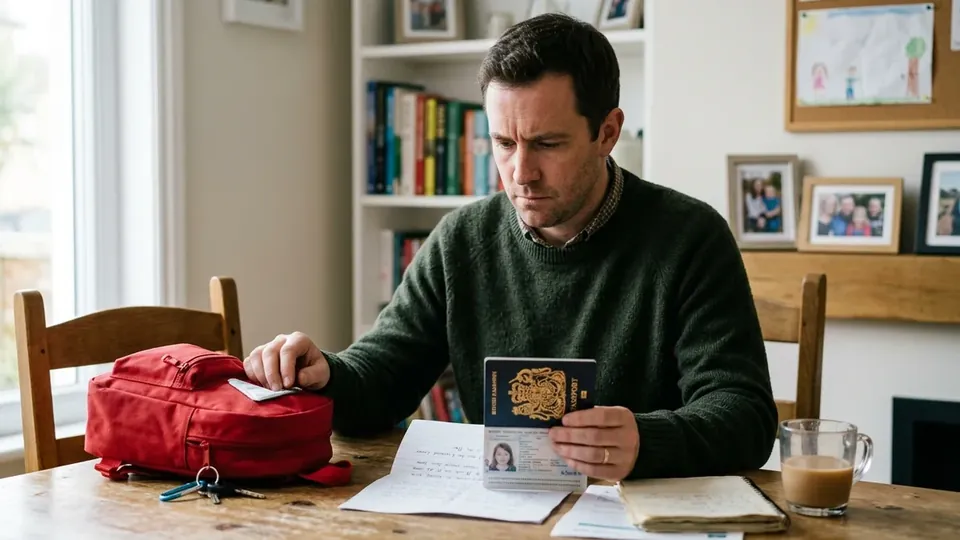
Passports are legally the property of His Majesty’s Passport Office (HMPO), not either parent. Neither parent possesses an automatic superior right to hold the physical document if both hold Parental Responsibility. Under the Child Abduction Act 1984, taking a child outside the United Kingdom requires written consent from every individual who holds Parental Responsibility, or a formal order of the family court. Unreasonably withholding a passport without valid safeguarding evidence is strongly disapproved of by family judges and can lead to an urgent Specific Issue Order (Form C100), but attendance at an accredited MIAM assessment is legally mandatory before applying.
Core Dispute Question: Under English family law, which parent has the legal right to hold a child’s passport, and what can you do if your ex-partner refuses to release it before a holiday?
Applicable UK Family Law & Judicial Rules
Child Abduction Act 1984, Section 13 Children Act 1989, and Section 10 Children and Families Act 2014. Unless a Child Arrangements Order specifying "lives with" status exists (which permits up to 28 days overseas travel without explicit consent), mutual written consent is legally mandatory for any trip outside England and Wales.
Judges possess statutory authority to pause court timetables and order cost sanctions against parties unreasonably refusing mediation.
Under Section 10 of the Children and Families Act 2014, self-certification is strictly scrutinized. Authorised FMC mediator signatures are mandatory on Form C100 / Form A.

Step-by-Step Resolution Roadmap for Parents & Spouses
Establish Legal Possession in a Mediated Parenting Plan
Define explicitly in a written Parenting Plan which parent holds physical possession of the passports for routine safekeeping, or agree to keep them in a neutral secure location.
Set a Mandatory Advance Notice Window
Incorporate a strict notification window (typically 30 to 60 days before any international booking) during which full travel plans must be disclosed.
Exchange Comprehensive Flight and Lodging Itineraries
Provide flight booking references, departure and return times, full accommodation addresses, emergency contact telephone numbers, and comprehensive travel insurance documentation.
Draft a Formal Travel Consent Letter
Prepare and sign a bilateral Travel Consent Letter accompanied by a certified copy of the child’s birth certificate to present to UK Border Force at ports of departure.
Strict Passport Handover Protocol
Agree on a precise deadline for releasing the passport (e.g. 7 days prior to departure) and returning it promptly within 48 to 72 hours of arrival back in the UK.
Facing an Urgent Standoff on This Issue?
Fast-track confidential MIAM sessions available within 24–48 hours. Accredited court form sign-off provided.
Common Tactical Mistakes to Avoid
Booking flights without written consent, cancelling joint mortgages unilaterally, or withholding passports triggers emergency court applications that judges view with severe disfavor.
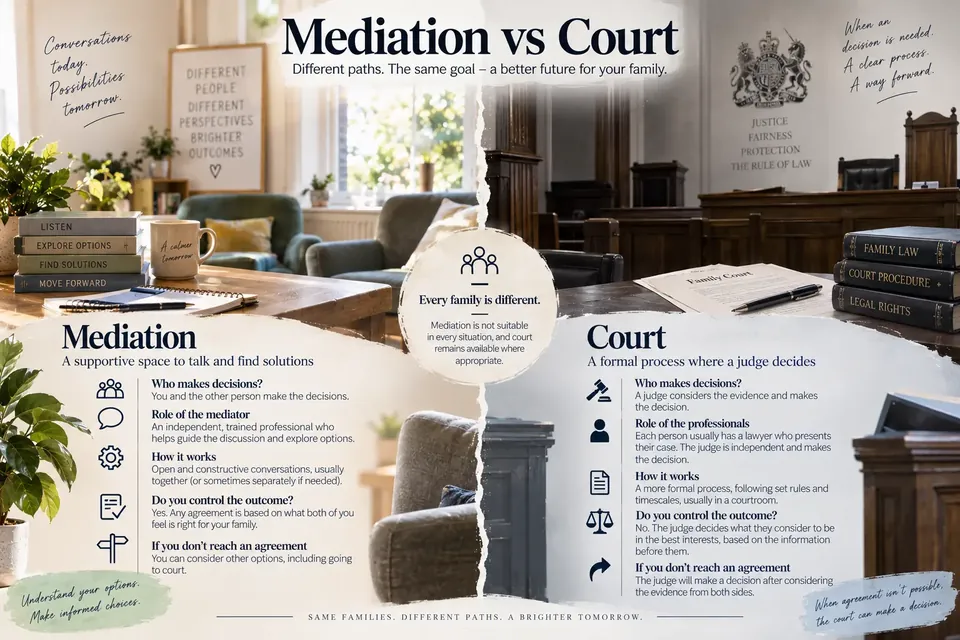
Filing Form C100 or Form A without an accredited mediator signature risks automatic strike-out or adverse cost sanctions under amended Family Procedure Rules Part 28.3.
Family mediation cannot issue legally binding emergency injunctions or physically halt an imminent international flight where there is a credible, verifiable risk of unlawful child removal. In genuine abduction emergencies, an immediate without-notice Prohibited Steps Order and an urgent port alert must be requested through the emergency duty family judge.
Designated Family Court Centres in Your Catchment Area
If mediation does not reach complete settlement, your accredited FMC mediator issues the official signed certificate required for submission to these regional family court centres:
90 Wellington Street • LE1 6HG
If mediation concludes without agreement, an authorized FMC mediator will sign your C100 or Form A for submission to Leicester Combined Court Centre.
90 Wellington Street, Leicester • LE1 6HG
Charnwood family cases are allocated to Leicester Combined Court Centre; our mediation service supplies the certified court documentation needed for application.
90 Wellington Street, Leicester • LE1 6HG
All contested family applications from the Hinckley area are heard at Leicester Combined Court Centre. Mediation provides a private, legally sound alternative.
Carrington Street, Nottingham • NG2 1EE
The Nottingham Justice Centre strictly enforces the requirement for a mediator-signed MIAM certificate on all Children Act 1989 Section 8 applications.
Explore Accredited Child Arrangements Mediation in Your Practice Hub:
Our accredited mediators deliver fast-track video appointments and in-person sessions across regional family court districts:
Related Family Law Articles & Practical Advice
Dividing the Six-Week Summer Holiday: Practical Solutions for Separated Parents
When Separated Parents Disagree on Taking a Child Abroad: Mediation & Court Rules
How to Agree a 50/50 Shared Parenting Rota: Mediation Protocols & Schedules
Book Your Confidential MIAM Consultation
Take the first constructive step toward resolution. Individual pre-court assessment meetings conducted remotely or at regional centres.